Skip to content

For FRCS (Plast) Section 1 · JCIE blueprint 2023

FRCS (Plast) Part 1
Question Bank

1,500 single best answer questions written the way the paper asks them, mapped to every topic of the JCIE syllabus — with two-paper timed mocks, the Daily Five, interactive 3D anatomy and analytics that show you exactly what to fix.

  • No card required
  • Referenced to current UK guidance
  • Independent of the JCIE
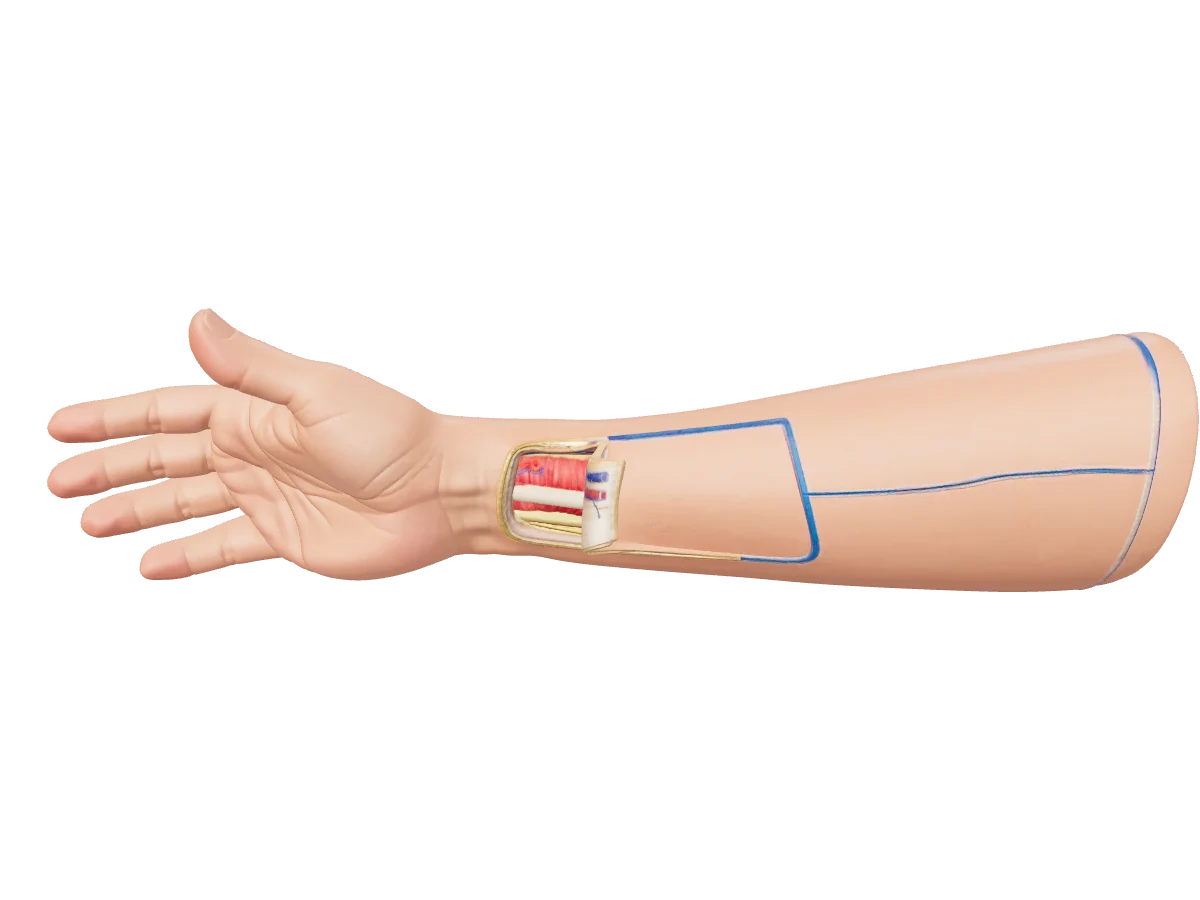
Radial forearm flap — 3D model

Radial forearm flap · Mark the flap and expose the artery

Allen’s test, then mark the radial artery by its pulse, design the paddle with its radial edge over the artery, and open the distal end to find the vessels.

Explore with hotspots
SBA questions
1,500
curriculum topics
75
syllabus domains
12
pearls of the day
200
interactive 3D models
8
General surgical principles Embryology Wound healing Skin grafts Flaps Microsurgery Tissue expansion Biomaterials & implants Lasers & energy devices Basal cell carcinoma Squamous cell carcinoma Melanoma Vascular anomalies Soft tissue tumours & sarcoma Benign & premalignant lesions Facial trauma Facial nerve & reanimation Head & neck reconstruction Head & neck oncology Ear (prominent ear, microtia) Nasal reconstruction Eyelid & periorbital Craniofacial Cleft lip Cleft palate & VPI Breast augmentation Breast reduction & mastopexy Breast reconstruction Oncoplastic surgery Gynaecomastia Congenital breast (tuberous, Poland) Chest wall reconstruction Abdominal wall reconstruction Back & spinal wound reconstruction Perineal & pelvic reconstruction Hand anatomy & examination Hand trauma Flexor tendon injuries Extensor tendon injuries Nerve compression syndromes Dupuytren's disease Scaphoid & carpal instability Hand arthritis (OA/RA) Hand infection Congenital hand Brachial plexus Peripheral nerve injury & repair Nerve transfers Lower limb trauma Pressure sores Diabetic foot Lymphoedema Burn assessment (depth & TBSA) Burn resuscitation Burns critical care & inhalation Burn surgery (debridement/grafting) Burn reconstruction Chemical & electrical burns Paediatric burns Congenital naevi Hypospadias & genitalia Paediatric vascular anomalies Facelift (rhytidectomy) Blepharoplasty & brow lift Rhinoplasty (aesthetic) Abdominoplasty Body contouring & post-bariatric Liposuction & fat grafting Non-surgical (toxin, fillers, peels) Gender-affirming surgery Consent Ethics Medical law Statistics & evidence Clinical governance & leadership

01Try it, no account

Try free FRCS (Plast) SBA questions

Twenty questions, one from every corner of the syllabus, with the full explanation underneath. Have a go at this one — rate your confidence first, the way the app asks you to.

  • Lean clinical vignettes with same-category distractors — the real paper's structure
  • Every explanation names the implied diagnosis, then justifies the answer and the distractors
  • A reference closes each explanation: NICE, BAD, BOAST, EMSB, Janis, Key Notes
12Upper limb & nerve·Brachial plexus
medium

Six weeks after a motorcycle crash, a 23-year-old has paralysis of the long finger flexors and hand intrinsics, with anaesthesia of the little finger and medial forearm. Shoulder and elbow function are normal. Nerve conduction studies show a normal ulnar sensory nerve action potential recorded from the anaesthetic little finger.

Where is the lesion most likely to be?

How sure are you?

02Explanations that teach

Understand the reasoning behind each answer

The exam is passed on judgement, not recall. So every explanation follows the same four moves — the ones you'll make in the exam hall.

Explanation · Upper limb · Brachial plexus

This is a lower-plexus traction injury, and a preserved sensory nerve action potential in an anaesthetic territory localises it proximal to the dorsal root ganglion.

In a preganglionic avulsion the sensory axons stay connected to their cell bodies in the ganglion, so the SNAP survives even though the territory is numb — the cord has been disconnected, not the peripheral nerve.

A postganglionic rupture or cord injury would abolish the SNAP; an ulnar nerve lesion at the elbow would spare the medial forearm and the long finger flexors.

Reference: Key Notes on Plastic Surgery 2e — brachial plexus injury; Janis, Essentials of Plastic Surgery 3e.

Name the diagnosis the vignette hid

The stem implies, never states. The explanation says it out loud first.

Justify the single best answer

The mechanism and the threshold that make it best — not just "correct".

Dismantle the distractors

Why each close contender fails on this stem. Same-category options, one discriminator.

Cite the source

Current UK guidance first, then the standard texts, so you can check us.

03Mapped to the JCIE blueprint

Revise plastic surgery by topic

Every question is tagged to one of 75 topics across the twelve domains of the syllabus, so you can drill a weak area tonight and see the gap close.

See the full FRCS (Plast) syllabus and revision topics, with question counts for every topic.

04Sit the exam before the exam

Practise with timed mock papers

The real format, end to end: two papers of 120 questions, 2 hours 15 minutes each, a question navigator, flagging, and review only after you submit. Watch an answer go through the app — confidence first, then the reveal, then where it lands on your readiness picture.

  • Wall-clock timer that survives a refresh
  • Flag, skip and return — just like Pearson VUE
  • Breakdown by topic, difficulty and domain after you submit

Confidence × competence

Last 48 answers

Confidence →Correct →

Underconfident

unsure · correct

0

Mastery

confident · correct

0

Knowledge gap

unsure · wrong

0

Dangerous misconception

confident · wrong

0

5 dangerous misconceptions — confidently wrong on flexor zone timing, Breslow thresholds and Parkland timing. Queued for tonight's Daily Five.

05Analytics that tell you what to fix

Track your progress across the syllabus

Before every answer you rate your confidence. Combined with whether you were right, each attempt lands in one of four quadrants — and the one that matters most is the dangerous misconception: confidently wrong. We find those and bring them back until they're fixed.

Exam-readiness score
A composite estimate banded from Developing to Exam-ready.
Calibration
Are you over- or under-confident, and on which topics?
Topic mastery
Coverage and accuracy for every one of the 75 topics.
Trends
Accuracy and speed over time, by paper and by session.

06Revision that fits the rota

Five minutes a day — the Daily Five

On the commute, between cases, in the coffee queue. Every day the app builds you a five-minute session: a drill from your weakest topics and lapses, one surgical pearl to flip and cement, and a micro-case that tests your judgement across three decisions.

Smart drill

Five questions picked for you: weak topics, lapses and new ground, with spaced repetition that brings misses back on schedule.

1,500 Qs

Pearl of the Day

Flip-card essentials — flaps, classifications, formulas — grounded in the core textbooks.

200 pearls

Micro-case

One patient, three decisions. An evolving vignette that trains judgement, not just recall.

100 cases

07Free, no account

Learn for free — notes, diagrams and interactive 3D

A growing library of original revision articles with our diagrams, and interactive 3D anatomy you can rotate, zoom and animate — flap designs, pedicles and cross-sections.

08Editorial standards

How the questions are written and reviewed

No recalled questions, no invented exam frequencies, no guaranteed-pass claims. Just a transparent process you can read in full.

Written to the official structure

Every item follows the JCIE sample paper: lean vignette, five same-category options, one defensible best answer.

Referenced to current UK guidance

NICE, BAD, BBA/EMSB and BOAST first; Janis, Key Notes and Grabb & Smith for the rest. Where a US text and UK guidance differ, UK guidance wins.

Honest about review

Every item is checked against its cited reference. Specialist clinical review is ongoing and we publish which sections have had it — no claims of sign-off that hasn't happened.

Open corrections

Spot an error? Report it from any question. We triage every report, fix or retire the item, and record the change.

09Simple, honest pricing

Choose your revision plan

Start free. Pay monthly, or save with a one-off block that covers your whole run-up to the exam and never auto-renews.

Free

£0

no card required

  • A 20-question sample drawn from every section of the bank
  • Daily Five drill & Pearl of the Day
  • Core analytics: accuracy, streaks & topic breakdown
  • Preview of the revision notes library
Create a free account

Essentials

£99

for 6 months · or £24.99/mo

  • The full single best answer question bank — 1,500 curriculum-mapped questions
  • Simple Question Mode & Study (tutor) Mode
  • Timed mock examinations in the real two-paper format
  • Daily Five with evolving micro-cases
See Essentials

Fellowship

Most popular

£179

for 6 months · or £44.99/mo

  • Everything in Essentials
  • Adaptive learning engine with spaced repetition
  • Confidence-vs-competence mastery analytics & exam-readiness estimate
  • The complete revision notes library
See Fellowship

Prices in GBP, payment by Stripe. Monthly plans cancel any time; blocks never auto-renew. Full refund within 14 days if you've attempted fewer than 20 questions. Full comparison

Questions about FRCS Plast Part A

Is FRCS Plast Part A the same as Section 1?

Yes. The JCIE calls the written examination Section 1 of the Intercollegiate Specialty Examination in Plastic Surgery; trainees often call it Part 1 or Part A. It is two single best answer papers of 120 questions, each lasting 2 hours 15 minutes.

What do I get for free?

Twenty questions with full referenced explanations on the free questions page — no account needed — plus, with a free account, the Daily Five drill, Pearl of the Day, core analytics and a preview of the notes library. No card is required.

Who writes and reviews the questions?

Questions are original items written to the structure of the official JCIE sample paper against current UK guidance and standard texts, and every explanation ends with its reference so you can check it. Specialist clinical review is ongoing and we say which sections have had it. Read how the questions are written and reviewed.

How is my exam readiness calculated?

Before each answer you rate your confidence. We combine that with whether you were right to place every attempt in a mastery quadrant, then derive a composite readiness score weighted across the syllabus — the method is explained inside the app.

Can I cancel?

Monthly plans can be cancelled at any time and run to the end of the paid month. The 3- and 6-month blocks are one-off payments that never auto-renew. If a purchase isn't right for you, message us within 14 days having attempted fewer than 20 questions for a full refund.

Start with 20 free questions

Create a free account with Google and go straight into the sample bank, today's Daily Five and your readiness dashboard. No card required.